
Trauma and PTSD in adults
Why Trauma Lives in the Body: Physical Reactions
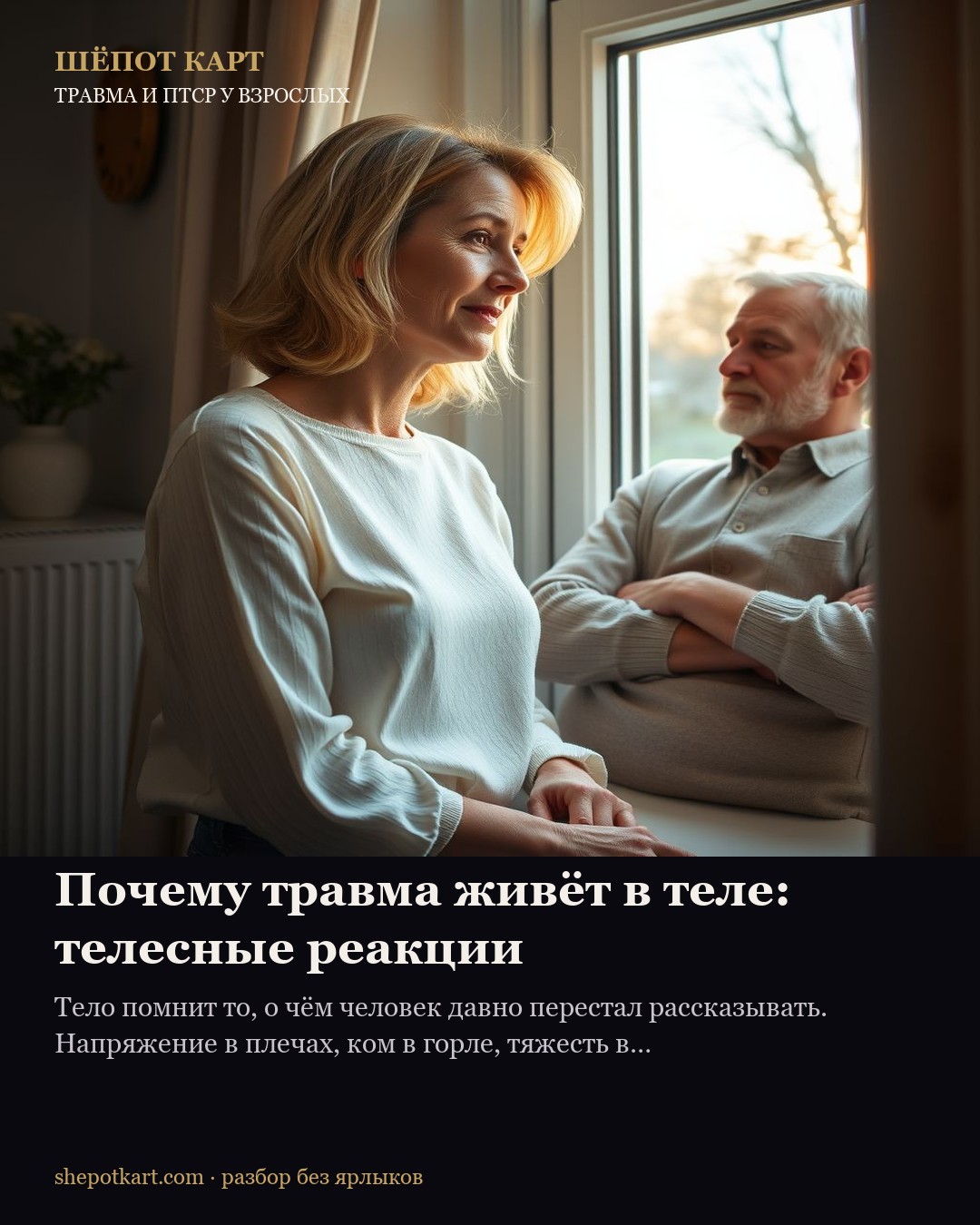
The body remembers what a person stopped talking about long ago. Tension in the shoulders, a lump in the throat, heaviness in the chest, the habit of tensing up at someone's sudden movement — all of this can be a trace of something endured. The body doesn't "make things up" and doesn't betray you: it holds onto a reaction that once helped you survive. Let's look at how this works and what to do about it.
Why they say trauma lives in the body
When a person faces a threat, a whole chain of changes kicks in: heart rate rises, muscles tense, breathing shifts, blood moves away from internal organs toward the limbs. This is readiness to act — to run, fight, or freeze.
Register to see
Register